
Published ·
EU pharmaceutical reform: supply security starts in the GDP warehouse
European rules strengthen availability only when inventory, batches, expiry, temperature and escalation are controlled in operations. Inter-Pharma applies this principle in Cheb.
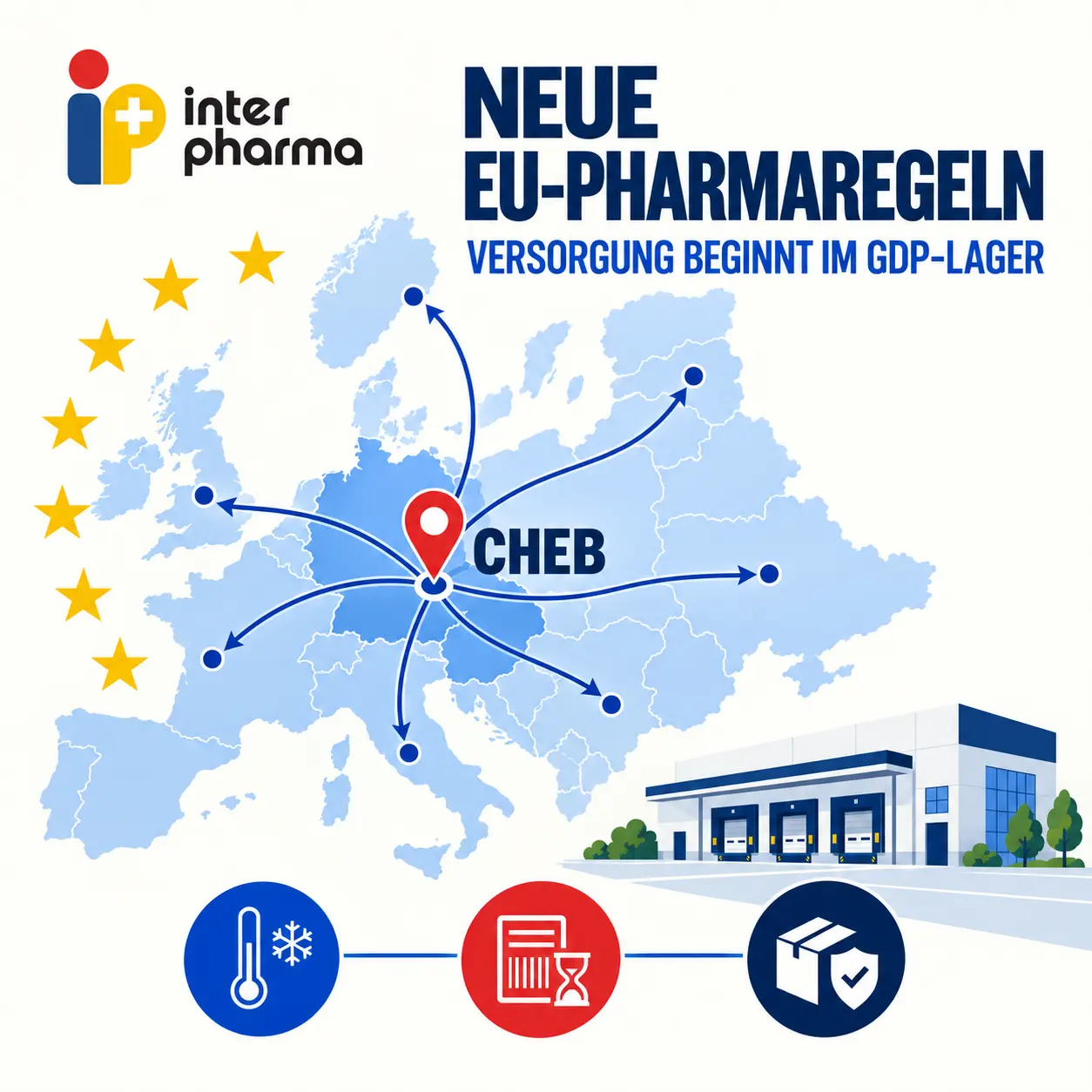
What EU pharmaceutical reform changes operationally
EU pharmaceutical reform aims to improve access, competitiveness and security of supply. Policy does not move a pack by itself: companies must translate expectations into inventory models, visibility and resilient operations. Warehousing therefore becomes an active control point for medicine availability.
Physical stock is not yet available supply
The relevant figure is usable stock: correct identity, released status, sufficient remaining shelf life, intact packaging and compliant storage. Quarantined or blocked batches must not inflate availability. KPIs should reflect quality status and customer requirements.
Size safety stock by risk
Safety stock should reflect replenishment time, demand variability, product criticality, shelf life, release time and alternatives. A single coverage target can create waste for slow-moving or short-dated products. Capacity, status zones and replenishment logic need to match product risk.
GDP warehousing as an end-to-end process
GDP warehousing begins before receipt, with product and temperature profiles, documents, status logic and deviation routes defined. At its Cheb warehouse, Inter-Pharma handles receipt, inventory and batch control, picking, pack verification and dispatch preparation. Transport and specialist services are clearly separated and arranged through qualified partners where required.
Batch, expiry and FEFO are control data
Batch, expiry and remaining shelf life drive release, allocation, FEFO, recall readiness and customer eligibility. Reliable master data, scan checks and documented exceptions reduce errors and prevent unexpected loss of usable inventory.
Define temperature and escalation before an event
Controlled ambient conditions follow the product specification; 15–25 °C is common but not universal. Inter-Pharma assesses 2–8 °C requirements by project. Alarm limits, reaction time, ownership, quarantine decisions and communication must be defined before an excursion or shortage signal occurs.
Cheb links Germany with Central and Eastern Europe
Cheb is close to Germany and opens short routes into Central and Eastern Europe. It can support regional buffers, launches and cross-border supply models, provided qualified processes, transparent data and clear interfaces are in place.
Inter-Pharma: from requirements to a robust warehouse process
We define product status, volume, pallet and order profile, temperature, batch and expiry logic, status areas, service levels, reporting and markets. This creates an operating model rather than a generic storage offer. Explore GDP pharmaceutical warehousing in Cheb or discuss a warehouse project with Inter-Pharma.
Frequently asked questions
Why does GDP warehousing matter for supply security?
Only compliant, released and timely stock is genuinely available. GDP processes connect quality with operational availability.
Does Inter-Pharma offer pharmaceutical storage in Czechia?
Yes. Inter-Pharma operates its own warehouse processes in Cheb for receipt, inventory, batches, FEFO, picking, pack control and dispatch preparation.
Which temperature ranges are available?
Controlled ambient storage is planned to product specification; 15–25 °C is common. 2–8 °C requirements are assessed by project.
Does high safety stock replace shortage management?
No. Stock must be linked to demand, replenishment, shelf life, quality status, alternatives and escalation.